A Weekly Meeting Operating System for Engineering Teams
A weekly engineering team meeting operating cadence template with agendas, notes, and action tracking to cut status meetings and ship faster.
Most engineering teams do not have a meeting problem. They have a system problem. Standups, planning, reviews, and 1:1s each run on different notes and scattered action items.
A weekly meeting operating system fixes the plumbing. Same agendas, same notes format, same place for decisions. The meetings get shorter because the structure carries the weight.
Start with the cadence, not the tools
Tools help, but cadence comes first. A simple loop — weekly planning, mid-week check, Friday demo or review — gives the team a heartbeat. Everyone knows when decisions get made.
Keep the set small. One team sync, one planning touch, one review, plus 1:1s. If a meeting has no decision or unblock attached, make it async. Your calendar will thank you.
Agendas that prevent rambling
Good agendas fit on half a page. Goal, open actions from last time, key metrics or blockers, decisions needed, and next steps. Assign an owner and a time box to each line.
Share the agenda the day before. Silent reading for five minutes at the start beats 20 minutes of status recaps. People arrive ready to discuss, not to report.
Notes people actually trust
Notes should answer three questions: what did we decide, who owns what by when, and what is still open. Everything else is optional. Use the same template every week so scanning is fast.
Store notes where work happens. If tasks live in GitHub or Jira, link them directly from the notes. Separate docs that no one opens are the same as no notes.
Make actions impossible to lose
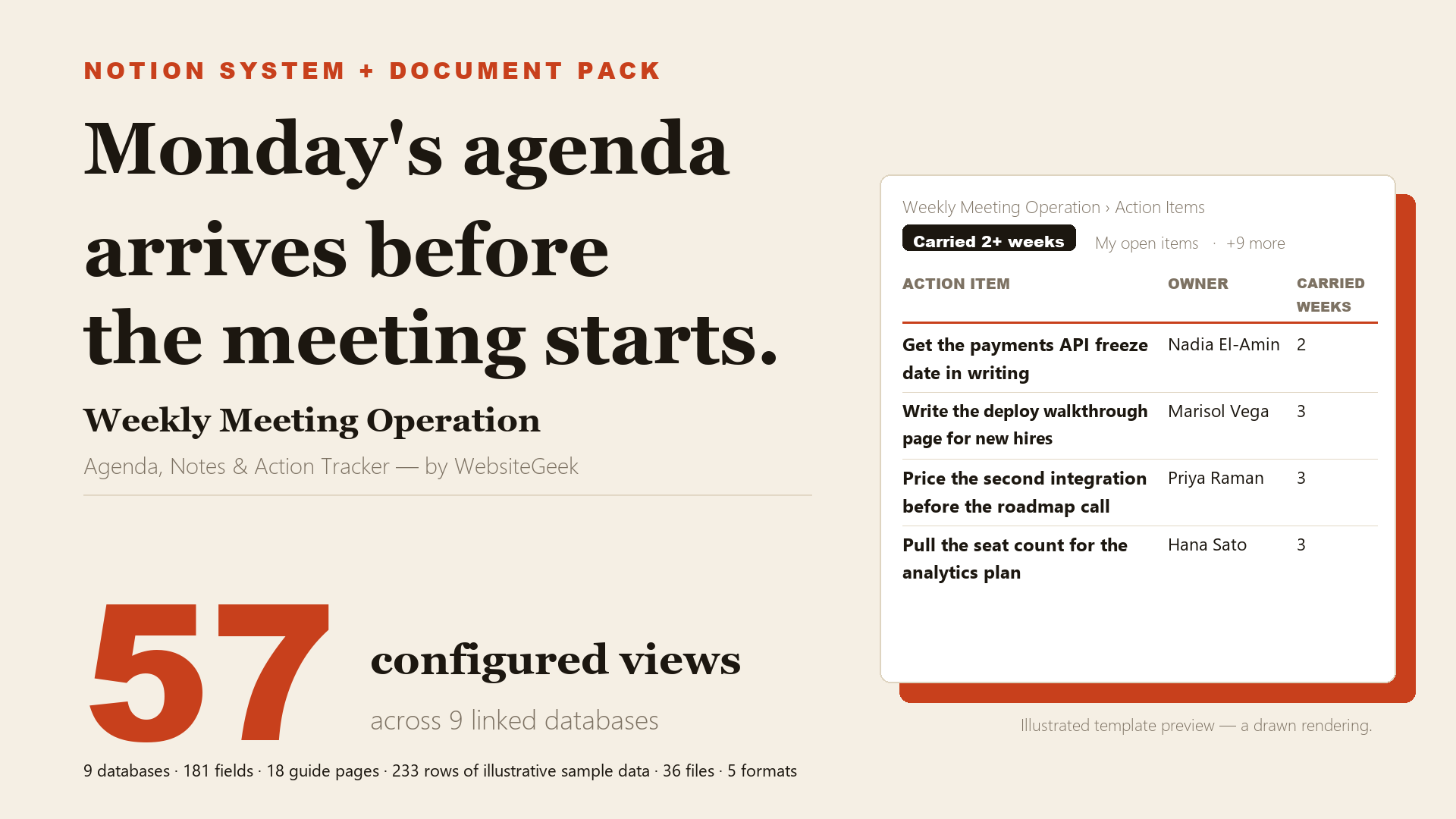
Action items die in chat threads. Pull them into a single tracker with owner, due date, and source meeting. Review open items at the start of each sync and close or reassign them.
The rule is simple: no owner, no action. Vague items like “look into perf” get rewritten as “Maya to profile checkout API by Wed.” Specificity is what moves work forward.
Decisions need a log
Teams rehash choices when the reasoning is lost. Log each decision with date, context, options considered, and who signed off. Future you will be grateful during incident reviews.
A one-line log is enough. “Chose Postgres queue over Redis streams for retry visibility — approved by Lee, Mar 4.” Short, searchable, and final.
Run tighter syncs for remote teams
Remote standups work best async-first. Post blockers and progress in text before the call, then use live time only for unblocking. Fifteen minutes is often plenty.
Rotate facilitator weekly. Shared ownership keeps the format fresh and stops one person from becoming the meeting bottleneck. It also trains newer engineers to run discussions.
Close each week with a demo, even a small one. Seeing working software reminds everyone why the process exists. Morale follows visible progress.
A pack beats starting from blank docs
Building agendas, notes templates, and trackers from scratch takes weeks of tweaking. A tested set lets you start Monday with naming, fields, and review order already settled. You adjust wording, not structure.
Teams that want that shortcut often adopt this one-time-purchase pack with agendas, notes, and action tracker to run planning, standups, and reviews from a shared operating cadence.
Pick one meeting to fix first, run the new format for three weeks, then copy what works to the rest. Small, steady changes to cadence compound into calmer weeks and faster shipping.
Comments
Join the discussionNo comments yet. Be the first to comment.